Safer Streets in Incline Village: New Traffic Measures Improve Pedestrian Safety
October 20, 2026 | Member Submitted
Do you know what a Leading Pedestrian Interval (LPI) is? It’s a slight head start that gives the walker a few seconds to step off the curb and into the crosswalk before vehicle traffic starts moving in the same direction. This slight timing difference increases pedestrian visibility to drivers and allows them to begin crossing before right-turning vehicles proceed, and has been shown to reduce pedestrian-vehicle accidents by 13-60%.
Leading Pedestrian Intervals are now integrated into stoplights in Incline. According to Roxanna Dunn, it is one of several safety action items discussed in Citizens Advisory Board meetings with Washoe County, NDOT, and TRPA representatives. Roxanna was the CAB Chair from 2024-2026.
Residents also requested a new four-way stop at Southwood and Village to increase safety. A secondary safety benefit of this light is that it can slow down the speed with which vehicles approach the stoplight at Village and Tahoe Blvd, a busy intersection. Thanks to Alex Wolfson, Dave Solaro, and Alexis Hill of Washoe County for their responsiveness to Incline concerns.
Many thanks to resident Helen Neff, who was very seriously injured when struck by a car in the Southwood/Northwood crosswalk several years ago. Helen has turned her misfortune into a tireless campaign to improve pedestrian safety in our town. Helen brought LPIs to the county’s attention, and we are grateful for her perseverance. Helen is responsible for bringing the Take It Slow signs to Incline Village, with the help of Take Care Tahoe, takecaretahoe.org
The Nevada Department of Transportation has adopted the Federal Highway Administration’s Safe System Approach. It is founded on the principle that no one should be killed or injured when using the road system. For more information on NDOT’s strategic plan for safety go to https://www.dot.nv.gov/safety/nevada-strategic-highway-safety-plan.
In The News – Construction season ends, East Shore Trail, SR 28 corridor improvements
October 14, 2026 | Member Submitted
Originally published in the Tahoe Daily Tribune, 10/14/2026, Staff Report
As the summer construction season winds down, the Tahoe Transportation District (TTD) today announced progress updates for improvements along Tahoe’s East Shore. This project includes extending the iconic East Shore Trail and providing off-highway parking options to relocate unsafe roadside parking along the Nevada State Route 28 (SR 28) Scenic Byway south of Incline Village, Nev.
SR 28 is a narrow two-lane road that provides access to some of Lake Tahoe’s most desired public lands along the East Shore of Lake Tahoe. With limited formal parking areas or trail connections, hundreds of vehicles park along the corridor’s steep road shoulders on peak summer days, creating major safety hazards and environmental impacts to Lake Tahoe. Public and private investments in the SR 28 corridor are improving safety, expanding transportation options, improving lake clarity, and enhancing the recreation experience for residents and visitors.
OCTOBER CONSTRUCTION UPDATES: U.S. 50 Tahoe Stateline to Spooner Summit Repaving Project
October 13, 2026 | Member Submitted
THANK YOU:
Paving operations are complete! We appreciate your ongoing patience as this two year project is almost finalized.
FINAL WORK:
Traffic control will remain in place as crews are finalizing signs, striping, painting barrier rails and cleaning up staging areas.
Work zones are there to improve the roads, and are not a place for impatient or aggressive driving. Please still Take it Slow Tahoe: speed is reduced to 35 mph through all zones.
Minimal delays are expected the remainder of the project.
PROJECT BENEFITS:
The resurfacing will provide a smoother, safer drive for the approximately 26,000 drivers who travel the busy stretch of highway daily with:
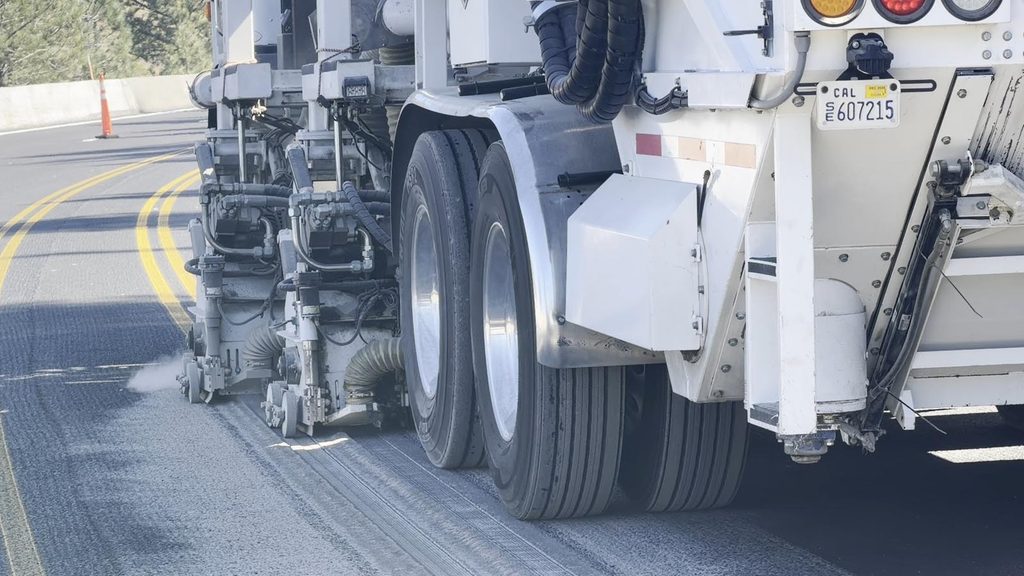
Three inches of aging roadway surface will be removed and replaced with new asphalt.
Between Spooner Summit and Glenbrook, two double yellow lines in the median will create a two-foot separation between traffic directions to reduce potential head-on crashes and enhance safety.
To also help reduce cross-over crashes, centerline rumble strips will be placed between Spooner Pass and Glenbrook and other select areas to help alert and correct drivers who may unintentionally leave their lane.
Certain sections of roadside guardrail will also be replaced or upgraded to concrete barrier rail to enhance safety.
Existing asphalt curbs will be replaced with concrete curbing to better withstand winter snow removal activities.
Drainage improvements will reduce roadway water ponding.
A fiber optic trunk line will also be installed to expand NDOT’s communications network, connect intelligent transportation systems, and provide a pathway for other communications services.
The resurfacing does not reduce the number of highway lanes and will not include major turn lane or intersection reconfigurations.
In The News – TRPA seeks input on Tahoe’s transportation future
October 7, 2026 | Member Submitted
Originally published in the Sierra Sun, 10/07/2026, Staff Report
The Tahoe Regional Planning Agency (TRPA) is inviting Lake Tahoe residents, workers, commuters, and visitors to participate in a survey to help create a more resilient transportation system. The information gathered will help partners strengthen Lake Tahoe’s transportation and emergency communications systems during hazardous events.
Participants who complete the survey and provide their contact information may enter to win a $100 Safeway gift card.
Lake Tahoe is increasingly prone to wildfires, severe winter storms, flooding, and landslides, creating challenges for people and the region’s transportation system. The survey asks participants to share how these potential extreme weather events affect their travel, the transportation challenges they experience, and how they prefer to receive information during emergencies.
In The News – Tahoe from two wheels: A bike path guide to experiencing Lake Tahoe’s hidden gems
September 7, 2026 | Member Submitted
Originally published in the Tahoe Daily Tribune, 9/7/2026, Written by Katelyn Welsh
Sunscreen—check. Hiking boots—check. Swimsuit and towel—check. It’s the final checklist review before embarking on the Lake Tahoe vacation of your dreams, but did you remember to bring your bike (and helmet)?
With Tahoe’s expansive multi-use path system, there’s a scenic bike ride just around the corner, no matter where you stay—offering a unique way to explore Lake Tahoe and discover its hidden gems.
The smell of pine trees, the wind nuzzling your hair, and the crunch of pine cones are just a few examples of how these paths pave the way to a more palpable Tahoe experience.
North Tahoe
North Tahoe is known for its smaller, charming towns, laid-back vibes, rich history, and abundant recreational opportunities with both Lake Tahoe and the Truckee River to explore. A vast network of paths offers access to nooks on the east, west, and north sides of the lake, as well as along the scenic Truckee River corridor to Olympic Village.
East Shore Trail
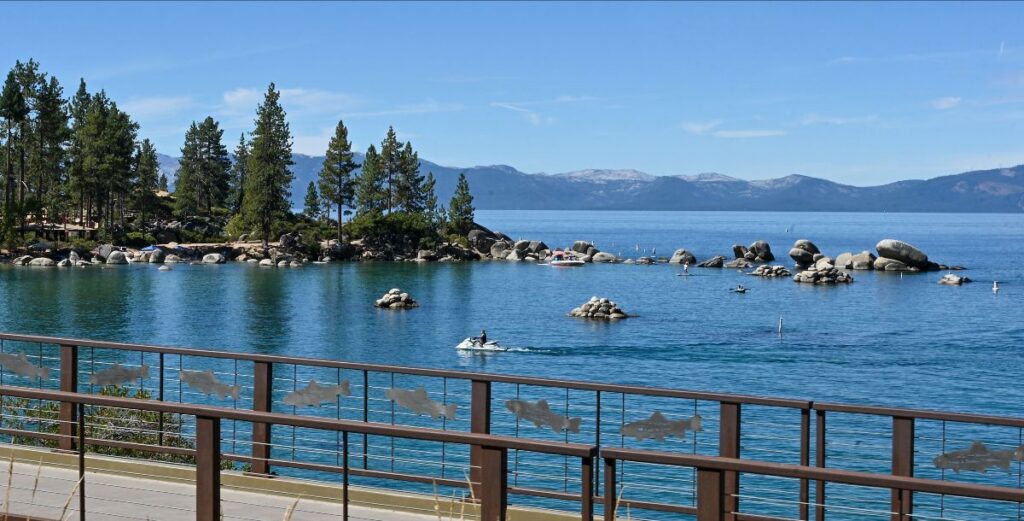
The crown jewel of multi-use paths in Lake Tahoe, this new trail teleports users to one turquoise cove after another and ends at Lake Tahoe’s most well-known beach, Sand Harbor. Biking to Sand Harbor allows you to skip the reservation system and the entrance fee is 80% off ($2) if you arrive by bike. For no fee, Hidden Beach and many other coves are scattered along the path. You can add the ride along the Lakeshore Blvd path adjacent to lakeside mansions and head up Village Blvd for food and drinks in Incline Village. Note, the beaches along Lakeshore Blvd are private.
Originally published by TRPA ENews – September 2026
When U.S. Transportation Secretary Pete Buttigieg gave the keynote address at the Tahoe Summit in 2024, he told the crowd of 1,200 people how he would explain his visit to his 3-year-old daughter.
“I went to a place full of people who are working to make their roads safer, to make their air cleaner, and to keep their lake safe,” said Secretary Buttigieg.
His words capture the interconnectedness of transportation and environmental protection in Tahoe. How people move through the basin affects the air we breathe, the water we protect, and the communities we call home.
Tahoe’s seasonal influx of visitors puts significant pressure on the region’s environment, roads, recreation sites, and communities. Through the Lake Tahoe Environmental Improvement Program(EIP), TRPA and Team Tahoe partners are working together to create safer, more connected, and more sustainable ways to get around the basin.
Whether it’s building bike trails and shuttle systems that reduce vehicle use or upgrading trailheads to improve parking and signage, Team Tahoe transportation partners are helping people enjoy Tahoe without losing what makes it special.
One of the most transformative examples is taking shape along Tahoe’s iconic East Shore. Photos by: TRPA and Brandi Caskey / Indigo Photography
A Safer, More Connected East Shore
The 28-mile Nevada State Route 28 (SR 28) corridor serves more than 1 million recreation visitors and 4 million vehicles each year. It’s a National Scenic Byway and an iconic stretch of Tahoe shoreline, connecting visitors to some of the region’s most popular recreation destinations. But accommodating that demand while protecting this extraordinary landscape is a complex transportation challenge. Limited parking and pedestrian facilities have created significant safety, congestion, and environmental challenges.
In 2013, 13 partner agencies came together to develop a shared vision for the corridor: safer travel, better recreation access, less impact on Lake Tahoe, and more transportation choices. That collaborative vision continues today through a suite of projects being advanced by partners throughout the corridor.
The Tahoe East Shore Trail was the first major milestone, opening its first 3 miles between Incline Village and Sand Harbor State Park in 2019. The trail, combined with managed parking areas at the north end and active parking enforcement outside of the park, effectively eliminated unsafe roadside parking along a key section of SR 28 and helped manage capacity at Sand Harbor State Park.
The trail is now being extended with funding from a federal grant and significant philanthropic support through the Tahoe Fund, creating more opportunities to walk and bike along the shoreline. Work is underway to expand the East Shore Trail from Sand Harbor to Thunderbird Lodge and eventually all the way south to Spooner Summit, where the Nevada Department of Transportation is constructing the Spooner Mobility Hub. This managed parking area will also house a permanent aquatic invasive species watercraft inspection station.
Other pieces of the vision are coming together, too. The U.S. Forest Service and partners recently completed improvements to the Chimney Beach trailhead parking area, providing safer off-highway access to popular recreation areas.
The East Shore Express, operated by the Tahoe Transportation District, offers another way to access the corridor and leave personal vehicles behind. The Express is planned to extend beyond its current route between Tunnel Creek and Sand Harbor State Park, connecting more recreation sites to new and planned parking areas along the corridor.
Together, these projects are transforming SR 28 from a challenging two-lane highway into a safer, more connected, and sustainable gateway to Tahoe’s abundant public lands.
Graphic by: Tahoe Transportation District
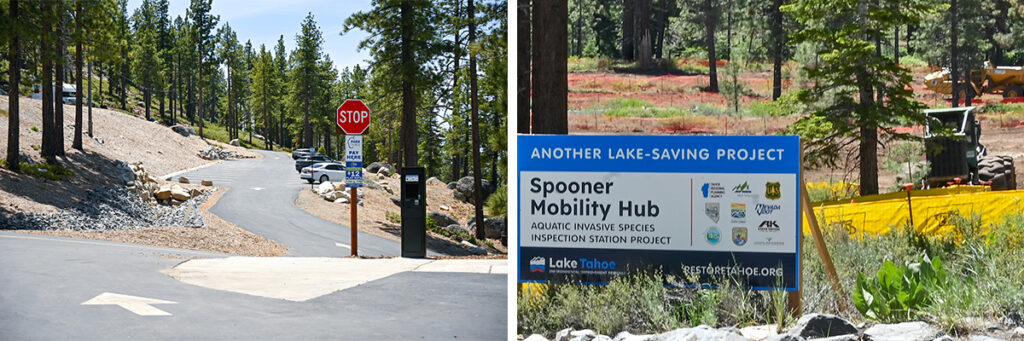
The improved Chimney Beach parking (left) and the in-progress Spooner Mobility Hub and Aquatic Invasive Species Inspection Station project (right) showcase how EIP investments can improve safety and recreation access while protecting Lake Tahoe’s water quality and supporting more sustainable transportation. Photos by: TRPA
New lots, new fines, new laws — Tahoe agencies are racing to get cars off the highway shoulder and into managed parking
Originally published in Moonshine Ink, 8/13/2026, written by Alex Hoeft
Every summer, Lake Tahoe’s transportation challenges become impossible to ignore. Gridlocked roads, full parking lots, and unsafe parking along busy highways are the visible signs of a problem that dozens of agencies have spent decades trying to solve.
Gavin Feiger, policy director for Keep Tahoe Blue, put it like this:
“Transportation in Tahoe has been one of the largest contributors to clarity decline. It has one of the biggest impacts on the environment and on our day-to-day lives. It’s a huge issue that we haven’t been able to crack as a region yet. We’re tackling aquatic invasive species. We’re doing restoration projects. Development is getting more sustainable, and it’s limited. Growth is capped. We’ve done all these things, but we just haven’t worked out transportation yet.”
The Local Lens highlights the people and businesses that help make Incline Village and Crystal Bay unique. This issue, JP Donovan, owner of Tahoe Multisport, shares why the East Shore Trail has become one of Lake Tahoe’s greatest outdoor experiences—and how everyone can help keep it safe and enjoyable.
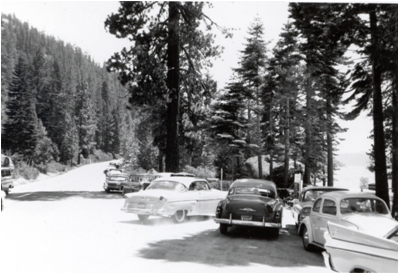
When I first heard an old Sand Harbor Story Years ago, I couldn’t stop thinking about it. A coworker told me his father used to visit Sand Harbor decades ago and ride his motorcycle right down to the beach. He’d park nearby, spend the day swimming in Lake Tahoe, and ride home when he was ready. At the time, it sounded like the perfect Tahoe experience.
Things have changed.
Today, Highway 28’s east shore is one of the most visited recreation areas in the Sierra. The informal roadside parking that once existed has disappeared in favor of designated parking areas, improved safety, and better protection of the lake and surrounding environment. While you can no longer pull up to the water in a vehicle, something even better has emerged.
The East Shore Trail.
The trail has opened this incredible shoreline to far more people than ever before. Families with young children, grandparents, visitors who aren’t comfortable hiking rugged terrain, and people of varying fitness levels can all experience the beauty of Tahoe’s east shore without battling highway traffic or difficult dirt trails.
I remember riding sections of the old dirt paths between the highway and the lake years ago. They were beautiful—but they were also rough. I had a couple of crashes that I was fortunate to walk away from. Today’s paved trail has made this coastline dramatically more accessible and enjoyable.
Electric bicycles have taken that accessibility even further.
The climbs that once discouraged many riders are now manageable for almost everyone. One of our favorite recent projects was building an electric tricycle for a 92-year-old rider who wanted to continue enjoying Tahoe by bike. Seeing someone continue exploring the outdoors at that age is exactly why this trail is so special.
With more people using the trail than ever before, courtesy and safety have become everyone’s responsibility.
Here are the reminders we share with every rider before they leave our shop:
Ride at a safe speed for conditions and the people around you.
When passing or encountering other cyclists or pedestrians, alert them of presence with the bell or by greeting them, avoid saying on your right or left as they may misinterpret.
If riding on the shoulder of the road, follow road rules and signal, stopping at stop signs.
Watch for children, pedestrians, runners, leashed dogs and slower riders who may move unpredictably.
Assume another trail user will be around every blind corner.
Look carefully before crossing driveways.
Choose a helmet with proper size and aspect ratio.
If crossing sand/gravel/ice/pine needles, brake/turn before/after.
Never assume motorists are stopping to allow you to cross.
When parking your bike, choose a location that does not impede others.
Just as important as riding safely is respecting everyone else who uses the trail. A smile, a wave, slowing down for others, and showing patience go a long way toward making the trail enjoyable for everyone.
At Tahoe Multisport, we’ve helped thousands of visitors experience the East Shore Trail over the years. Every rental includes a helmet, route recommendations, and a safety orientation because we believe a great ride starts before the wheels begin turning.
Today’s bicycles also allow more people than ever to find the right ride for their adventure. Some riders enjoy a traditional cruiser for the challenge and exercise. Others appreciate the comfort of an electric bike for exploring longer distances. Families can bring children along on cargo bikes, while riders seeking additional stability often find electric tricycles to be an excellent option. Mountain bikes make it easy to continue beyond the pavement and explore Tahoe’s extensive trail network.
No matter what you ride, the destination remains the same.
There’s still something magical about reaching one of Tahoe’s beautiful beaches under your own power, locking up your bike, diving into the clear water, and spending the afternoon by the lake. We may not be parking motorcycles on the sand anymore, but in many ways, today’s East Shore Trail offers an even better way to experience this remarkable place.
Ride safely, be courteous, and enjoy one of the most beautiful bike rides anywhere.
Originally published in the TRPA Newsletter, 7/27/2026
Over the July 4 holiday, Tahoe residents, visitors, and partners came together to protect the region through cleanup efforts, responsible recreation, and stewardship actions. Photo by: TRPA
Early summer data show continued progress from Tahoe partners working to manage peak-season visitation, protect natural resources, and improve transportation options across the basin. Some highlights:
The Emerald Bay Shuttle served 956 riders in its first 10 days, providing an alternative transportation option to one of Tahoe’s most visited destinations.
The East Shore Express continues to see strong ridership, averaging 310–370 riders per day. In 2025, 22,374 total riders left their personal vehicles behind to experience Tahoe’s East Shore via the East Shore Express.
The 13th Annual Keep Tahoe Red, White & Blue cleanup on July 5 brought together 446 volunteers who removed 1,330 pounds of litter from beaches and surrounding parking lots, trails, and streets across six sites—less litter than the event’s historical average and a positive indicator of ongoing stewardship efforts.
Boaters, watercraft inspection teams, and Tahoe Keepers continue to prevent the spread of aquatic invasive species by practicing Clean, Drain, and Dry protocols. Marina partners also helped stop six illegal boat launches. With golden mussels proliferating in nearby California waterways, vigilance at every entry point remains critical to protecting Lake Tahoe Basin waterbodies from this significant threat.
Partners across the basin are implementing Destination Stewardship efforts to promote responsible recreation and protect Tahoe during the busy summer season. Increased law enforcement presence and stewardship signage at Tahoe Blue Beaches are helping create a safer, more welcoming experience for visitors.
As summer continues, residents and visitors are encouraged to help protect Tahoe by recreating responsibly, following stewardship practices, and staying engaged in the future of the Tahoe Basin.
In The News – Spooner Transportation Hub makes noticeable progress
July 10, 2026 | Member Submitted
Originally published in the Tahoe Daily Tribune, 7/10/2026, Written by Katelyn Welsh
The Spooner Transportation Hub appears to be making very rapid progress, with the removal of trees drawing attention along State Route 28.
The project, which began in May, will supply an additional 250 parking spots, a watercraft inspection station and an access point for Tahoe Transportation District transit services, along with restrooms and EV charging spaces.
The project site is located near the Spooner Lake State Park entrance and is a part of regional partners’ larger initiative to reduce unsafe roadside parking along State Route 28.