< Back to Community News

In the News – Incline High School swim team makes a splash in first home meet

March 25, 2026 | Member Submitted

Originally published in the Tahoe Daily Tribune, 3/25/2026, Submitted

The Incline High School swim team kicked off its first home meet of the season on Saturday, March 21, in impressive fashion, highlighted by multiple first-place finishes, personal best performances, and a strong wave of new regional qualifications. The Highlanders delivered a win against Sparks, securing an overall team victory.

Leading the way in the relay events, the girls’ 200 medley relay team of junior Sady Kelly, senior Katie Ferrall, freshman Elizabeth Hansen, and freshman Haddie Rudd captured first place with their fastest time of the season. The momentum continued in the girls’ 200 freestyle relay, where the A team—Ferrall, Kelly, Rudd, and Hansen—claimed another first-place finish with a season-best time of 2:04.43. The B team, consisting of senior Ashley Siminov, freshman Bellini Hane, sophomore Olivia Kranz, and freshman Justine Daniel, also delivered a strong performance, finishing third.

READ MORE >

< Back to Community News

Fireworks Barge Recovery Underway in Lake Tahoe

March 25, 2026 | Member Submitted

Originally published with Incline Fireworks, Written by Kristie Wells, 03/22/2026

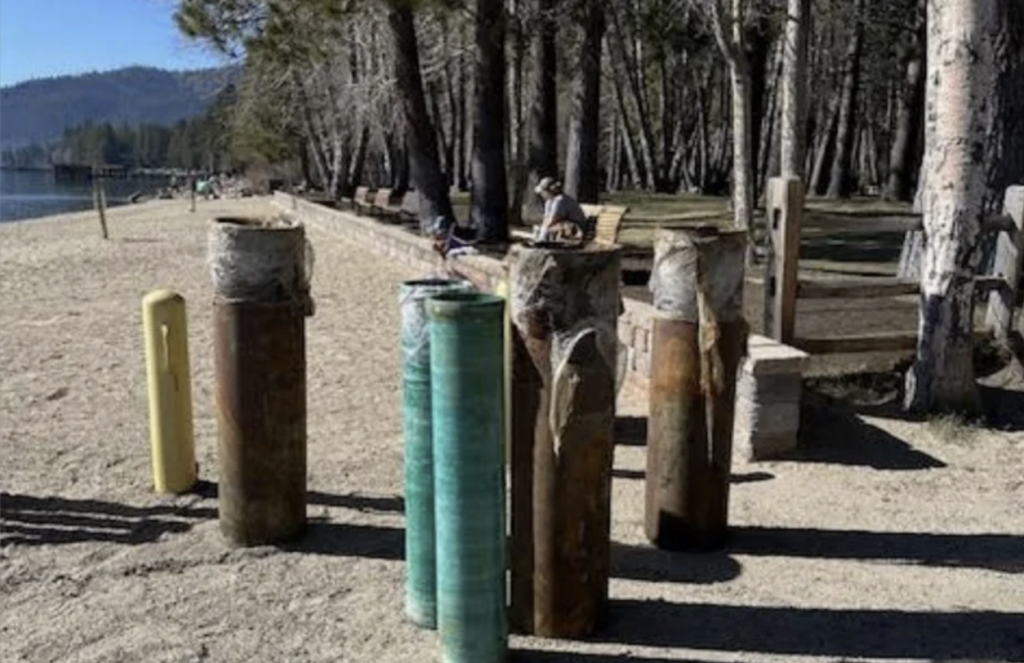
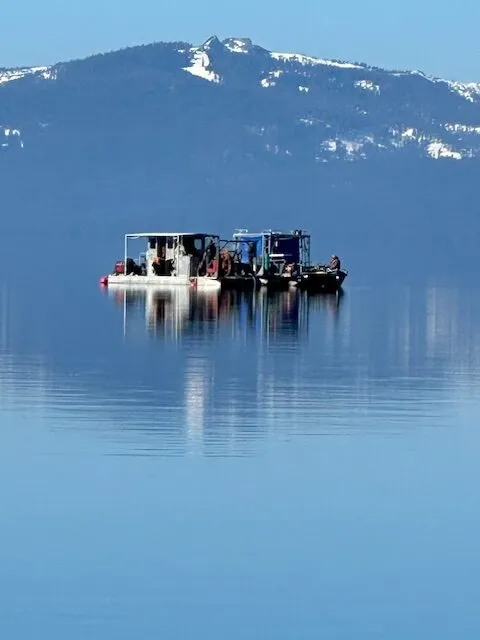
Recovery efforts are now actively underway to remove the sunken fireworks barge from the waters offshore of Ski Beach in Incline Village. This highly technical and physically demanding salvage operation began on March 16, 2026.

Dive teams, marine crews, and agency partners are working in close coordination to locate, secure, and begin extracting debris from the lakebed, with some materials resting at depths approaching 160 feet.

From the outset, the work has been methodical. Each day begins with planning and safety briefings involving multiple agencies, followed by carefully staged operations on the water. A remotely operated vehicle, or ROV, was first deployed to locate the barge and establish precise working zones. Divers then began descending along secured lines to recover debris and assess conditions on the lakebed.

Progress is steady, but intentionally cautious. At depth, visibility quickly drops to near zero once sediment is disturbed, requiring divers to rely on training and touch to locate and rig debris. Many of the materials, particularly large firework tubes, are heavy and irregularly shaped, often requiring multiple dives to secure a single piece.

These are short, highly controlled dives, sometimes limited to 10 minutes, and they demand both physical endurance and precision.

Crews have already recovered a range of debris, including firework components, with additional materials identified for retrieval.

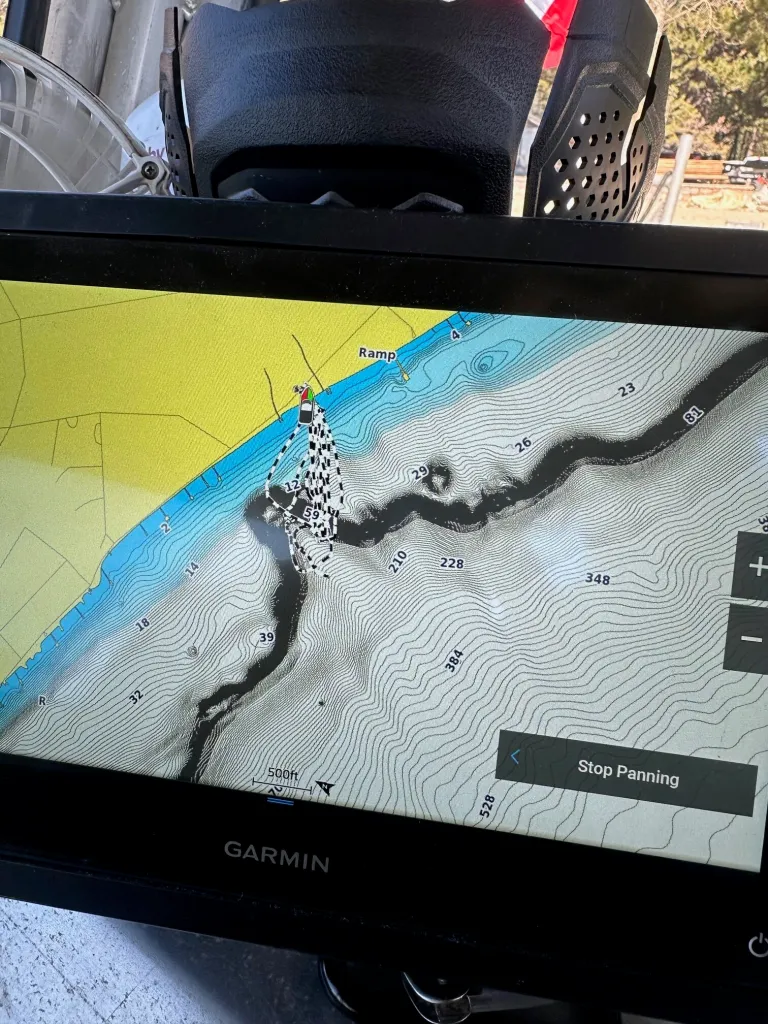
As work has progressed, logistical challenges have become more apparent. Sonar mapping revealed a steep underwater shelf along the planned recovery path, where the lakebed drops sharply from approximately 80 feet to over 150 feet within a short distance. This requires careful repositioning of the barge during extraction to prevent instability.

To prepare for lifting operations, teams have installed a network of heavy-duty lines, known as hawsers, along with lift bags designed to gradually raise the structure. By March 18, four of six primary lift lines had been set, with additional rigging completed shortly after.

As expected with a project of this scale, there have been setbacks. Mechanical issues, including a seized air compressor and engine challenges, caused temporary delays earlier in the week, but both have since been resolved.

On March 20th, crews reached an important milestone when the barge began to lift, rising approximately 40 feet off the lakebed before two primary lines failed under pressure. The release sent several lift bags rapidly to the surface.

No divers were in the water at the time, and established safety protocols ensured there were no injuries.

Following the incident, crews determined that uneven air distribution, caused by a kinked airline, placed excessive strain on certain lines. The team is now replacing the original 1.5-inch lines with heavier 2-inch hawsers and upgrading air systems to ensure a more balanced lift.

While much of the work is taking place offshore, public activity has added another layer of complexity.

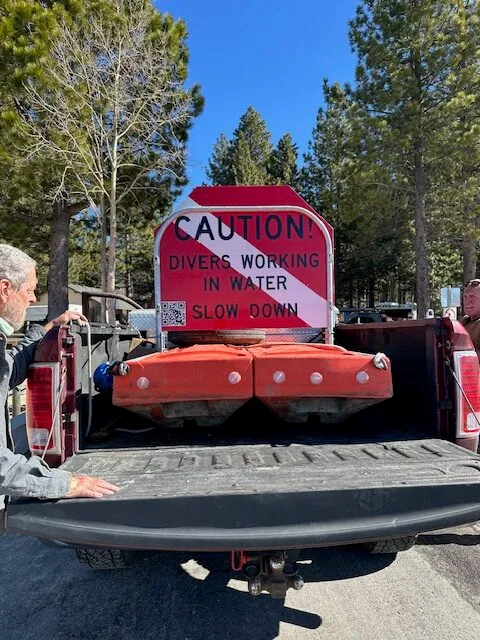
Despite clearly marked safety zones, some boaters, paddleboarders, and kayakers have approached or entered restricted areas. Even when outside the perimeter, fast-moving boats can create wakes that disrupt sensitive equipment and temporarily halt operations.

Onshore, IVGID staff and park ambassadors have played an important role in maintaining the beach closure and preventing unauthorized access. Additional signage and coordination with the U.S. Coast Guard and TRPA continue to reinforce the need to stay clear of the work zone.

Crews have also noted concerns with exposed lift bags, some visible at the surface and others just below. These can pose a safety risk if approached or disturbed.

This is not a routine recovery effort. Divers are working in deep, cold water with limited visibility while managing heavy materials and complex rigging systems. Every step is calculated, and safety remains the top priority.

Weather conditions also continue to influence the timeline, with wind already causing periodic pauses in operations. Teams are monitoring conditions closely and adjusting plans as needed.

The immediate focus remains on safely lifting and repositioning the barge so it can be brought to shore. While the process may appear slow, it is progressing as intended, with careful attention to safety and detail at every stage.

The community’s continued patience and cooperation is both noticed and appreciated.

Photos of the operations provided by Parker Diving Service

FREQUENTLY ASKED QUESTIONS (FAQ)

1. Why is this recovery taking place eight months after the sinking?

While the incident occurred on July 4, 2025, and initial Phase I ROV (remotely operated vehicle) surveys were completed in October 2025, the timeline for active recovery was extended due to the time required to finalize salvage agreements.

The barge owner, Tahoe Marine and Excavation, was responsible for executing these agreements. Recovery operations could not proceed safely or legally until those contractual matters were resolved. With those agreements now in place, the project can move forward.

2. Why was there a lack of information provided to the public?

Public communication following the incident was necessarily limited due to legal constraints – including threatened litigation by the barge owner – and the complexity of coordinating multiple parties involved in the response and recovery efforts.

Incline Fireworks is a volunteer-run organization, and throughout this process, the Board relied on guidance and direction from legal counsel, insurance representatives, and other subject matter experts. While there was a strong desire to provide more frequent and detailed updates to the community, communications were constrained to ensure process integrity and avoid inadvertently impacting recovery efforts or ongoing claims.

As these constraints have eased, Incline Fireworks has worked to share timely and accurate information. The organization remains committed to transparency and has made every effort to keep the community informed within the boundaries of what could responsibly be communicated.

3. What exactly is being removed from Lake Tahoe?

The recovery effort is comprehensive and includes:

Fireworks: 54 remaining fireworks shells, approximately 4% of the original 1,270-shell inventory. [Read more]

Structural Debris: Large steel plates that settled on the lakebed after separating from the vessel.

The Vessel: Three individual pontoons from the six-pontoon barge structure.

General Debris: Any associated materials identified during the final lakebed cleanup.

All materials are handled, transported, and disposed of in accordance with applicable safety and environmental regulations.

4. Who is performing the work?

The recovery operation is being carried out by a team of specialized contractors with expertise in marine salvage and explosive handling:

Parker Diving Service is leading the underwater salvage operations.

Lantis Fireworks, Inc. is providing ATF-certified professionals to manage the safe handling, recovery, and transport of fireworks materials with oversight from North Lake Tahoe Fire Protection District.

Marine and heavy equipment subcontractors are supporting surface operations, lifting, and logistics.

5. Why does the beach need to be closed if the work is underwater?

The beach closure is a necessary safety measure due to the nature of the surface operations supporting the underwater work.

This includes using heavy marine equipment, dive vessels, cranes, and the controlled handling and transport of explosive materials. These activities require a secure and controlled environment to protect both workers and the public.

Unauthorized access to the area – whether by boat, paddlecraft, or from shore – could create serious safety risks and disrupt operations. The temporary closure ensures that the work can proceed efficiently and without incident.

6. What makes this dive so “technical”?

The debris field is located at a depth of approximately 140 feet. However, due to Lake Tahoe’s high elevation, reduced atmospheric pressure increases the physiological impact on divers, creating an “effective depth” of approximately 190 feet at sea level.

This significantly elevates the complexity of the operation. Divers must follow advanced decompression protocols, utilize specialized gas mixtures, and operate with strict bottom-time limitations. A fully equipped hyperbaric chamber is required onsite to manage decompression safety and mitigate risks such as decompression sickness.

In addition, cold water temperatures, limited visibility, and the need to safely handle explosive materials further increase the technical demands of this recovery effort.

7. Who is paying for the cleanup?

Incline Fireworks funded the immediate response and cleanup efforts following the July 4th incident. This included:

Collaboration with IVGID on beach cleanup operations, including the use of Eco-Clean’s BEBOT to restore shoreline conditions.

Support for IVGID’s Public Works response, including heavy equipment and staffing to remove displaced debris and timbers from the barge. IVGID has submitted an invoice for these services.

Engagement of Dive Robotix for initial underwater recovery, including divers, support crews, and specialized equipment.

Connolly Crane Service to remove three barge pontoons from Ski Beach for transport.

Lakeside Specialized Transportation to return the three recovered barges to their owner, Tahoe Marine and Excavation in Tahoe City.

High Sierra Marine, which provided marine support services including vessel coordination, on-water logistics, and operational support during recovery efforts. High Sierra Marine has submitted an invoice for these services.

Lantis Fireworks personnel and resources to safely recover, categorize, and transport fireworks in compliance with U.S. Department of Transportation (DOT) regulations, in coordination with the North Lake Tahoe Fire Protection District and Washoe County Sheriff’s Office.

In total, approximately 95% of the fireworks were recovered immediately, with an additional 1% recovered in the days following the incident. Incline Fireworks also absorbed the cost of unrecovered fireworks materials.

Ongoing recovery and salvage operations are being managed through the applicable insurance coverage. [Read more]

8. Can you remove 100% of the items related to the incident?

Initial beach cleanup efforts were completed to a high standard, allowing Incline and Ski Beaches to reopen on July 6, 2025.

Approximately 96% of fireworks materials were removed from the lake within the first week following the incident. Since underwater recovery operations resumed in March 2026, additional materials – including many of the remaining shells – have been successfully recovered.

While the goal is always full recovery, it is important to acknowledge that underwater salvage operations – particularly at this depth and in these conditions – do not always guarantee 100% retrieval. Incline Fireworks is actively working to ensure that the three barge pontoons from the original structure involved in the 2025 incident are removed as part of this operation.

Regarding water quality, IVGID has collected water samples throughout this investigation and continues to do so to ensure safe drinking water levels. [Read more]

9. Are there any fines being imposed for the items in the lake?

At this time, Incline Fireworks has not incurred any fines related to the incident. A spill report was filed with the Nevada Department of Environmental Protection within two days, in accordance with regulatory requirements.

The barge owner is working in coordination with the Tahoe Regional Planning Agency (TRPA). Any determinations regarding penalties or enforcement actions would be made by the appropriate regulatory agencies upon completion of their review. 

10. Who manages the perimeter around the work zone?

Aspen Insurance, the carrier responsible for this claim, manages the operational perimeter and safety protocols for the active recovery zone, along with the contractors Aspen Insurance engaged to perform the work.

These teams are responsible for establishing exclusion zones, coordinating marine traffic safety, and ensuring all operations comply with safety and regulatory requirements, in coordination with the Tahoe Regional Planning Agency (TRPA) and the U.S. Coast Guard.

Because this aspect of the operation is managed externally, Incline Fireworks does not have direct oversight of perimeter enforcement details.

11. Will the findings of the investigation be shared?

Yes. Incline Fireworks expects that a comprehensive report will be available once the investigation is complete.

At this time, the investigation remains active, and there are limitations on what can be shared publicly. This is standard practice to preserve the integrity of the investigative process and ensure accurate, fact-based conclusions.

Once finalized, the findings will provide greater clarity on the sequence of events, contributing factors, and any recommended changes moving forward.
< Back to Community News

Incline’s Old Orbit Gasoline Station

March 25, 2026 | Member Submitted

Written by Richard Miner in IVCBA – LIVE.WORK.PLAY. Magazine Holiday Edition

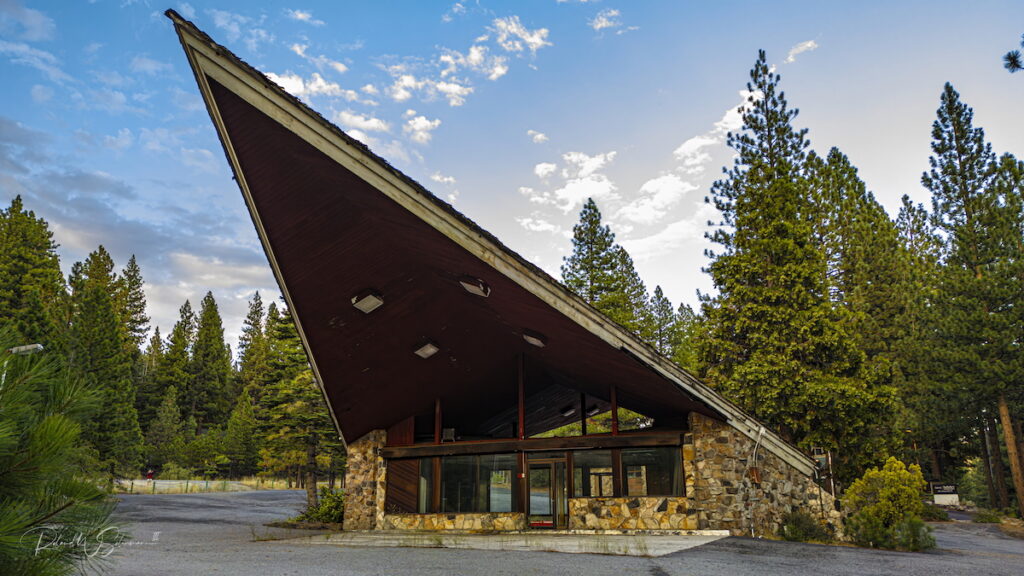
Few buildings in communities around the North Shore of Lake Tahoe have attracted more attention for longer than the Orbit gas station on SR 28 at the entry to Incline Village from the Crystal Bay side of town. But the deeper this author got into the history of this landmark, the more complicated telling its story became. With the relocation of SR31 (now 431, the Mount Rose Highway) completed in 1959, in time for the 1960 Winter Olympics to be held at Squaw Valley that year, the need for a gas station between Reno and the California border at Kings Beach became a necessity. Enter Jack A. Ferguson, Senior, who purchased property at the then junction of Nevada State Highway 28 (now Lake Shore Blvd.) with the newly completed Mount Rose Highway. Jack purchased the land from the Crystal Bay Development Company in a deed signed on the 25th day of April, 1961. The property is to this day still owned by Jack Ferguson’s heirs under the business name of Village Springs LLC.

The new Mount Rose Highway followed a significantly different path than today. In 1961, the new roadway curved towards Crystal Bay on the uphill side of the current roundabout and proceeded west, making a sharp turn down to Lakeshore Blvd. (then SR 28) to form a T-intersection. In so doing, it literally wrapped around the Orbit station property between what is now a small Washoe County public park and the gas station site. SR 28 then continued straight towards Crystal Bay, slightly below the current alignment of that highway. Thus, the Orbit gas station was in a perfect location for travel between the California border and Reno or the east shore of Lake Tahoe.

A feature of “our” Orbit station that has always attracted attention is its design, which is usually classified as “Mid-Century Modern” by architectural standards but is more commonly known as “Space Age” or “Googie” architecture. Our station is popularly associated with a series of gas stations built in California in the late 1950s and 60’s, which featured reinforced concrete “flying wing” designs, some of which are still extant in the Sacramento area. At least some of these “Googie” style gas stations built around Sacramento are attributed to an architect named Ed Ward, but Ward had nothing to do with the Incline Orbit station. Local architect Phil Gilanfarr, whose father also practiced architecture here, is currently involved with the design and planning of the future use of what I will simply call the Orbit property for Village Springs LLC. Phil was very helpful in my research and supplied a copy of the original correspondence between Washoe County and the actual architect retained by Jack Ferguson to design his Orbit station, one Sherrill Jay Broudy. Broudy later achieved success in Southern California as a designer and manufacturer of wall panels and mid-century modern furniture via a  Los Angeles-based company named Forms and Surfaces, a successor of which is still in business in Carpinteria, CA.

It is probably lost to history as to how Ferguson and Broudy came together to create our Orbit’s station striking design, but the evidence is clear: Sherrill Broudy was the architect for the Incline Village project. A search of the AIA (American Institute of Architects) database at the time lists Sherrill Jay Broudy of Los Angeles, CA, but not a single major building for which he was responsible, not even Incline’s Orbit gas station. However, according to architect Gilanfarr, Broudy was also the designer of a pounded brass door, which, to this day, still decorates the front door of a house on Fairview Drive in Incline Village. How Ferguson and Broudy got together to design the Orbit station still remains a mystery, but Ferguson had business dealings in the Los Angeles area that may have led to a client/patron relationship. And Broudy’s involvement in the Orbit project then might have led to the door covering commission. mentioned above—but this is just speculation.

In any case, the Broudy design was quickly finalized, and construction began in the summer of 1961. According to Gilanfarr, the structure is steel-framed, anchored in stone-faced concrete piers on opposite sides of the building where the structure meets the ground. Timber beams were bolted to the steel, and a shake roof of plywood paneling covers the soaring wings, which are the major visual feature of the design. The resulting structure was surprisingly rigid despite its lateral overhangs and has remained amazingly intact after 65 years of Sierra Nevada weather, which has wreaked havoc with lesser structures. The contractor for the project has still not been identified, but progress was rapid, and Washoe County records indicate that a Certificate of Occupancy for the new gas station was issued on June 14, 1962.

A lot of misinformation surrounds the names of gas stations associated with the Orbit “brand,” which cropped up across California and elsewhere in the early 1960s. But over the years, many independent stations, and for that matter, even large resellers like Costco, purchased their gasoline from private distributors who were not directly affiliated with the large refiners like Chevron or Shell. However the the last affiliation for Incline’s Orbit station was, at least from the decals still visible on its doors, none other than one of the largest domestic oil refiners, Texaco. That said, all the research I’ve done indicates there was never a gasoline refiner or distributor named Orbit. Here’s a quote from a Google search on the subject:

“Orbit was not a gasoline distributor in the 1960s; it was a brand of gas-station-branded gum sold in the 1960s. The name Orbit was associated with gas stations for a period of time, but the brand is most famously known as a brand of chewing gum sold by the Wrigley Company.” 

So there is still a lot missing from establishing the provenance of Incline Village’s Orbit gas station. Jack A. Ferguson, Sr. and his wife, Mary Ann, divorced, and the record shows the ownership of the station property was transferred to one “Mary Ann Ferguson” on April 26, 1996. On May 3, 2004, Washoe County records show that “M.A. Ferguson” transferred ownership of the property to Village Springs LLC, which remains the owner of record to this day. Jack Senior remarried and passed away over a decade ago, but Mary Ann—as of a year or so ago—was still alive, and their daughter, Catherine, now heads the Village Springs LLC. Village Springs retained the services of Incline architect Phil Gilanfarr to develop a variety of plans for how best to use the property going forward. These plans are still a work in progress today.

___________________

Photo Credit: The photos used in this article were taken by Incline resident Roland Schumann in September 2025. Mr. Schumann has generously given the author one-time permission for their use. These images are copyrighted by Mr.Schumann.

< Back to Community News

Voices for Housing Episode 2: Xander

March 25, 2026 | Member Submitted

Originally published with Tahoe Housing Hub, 03/18/2026

This week we introduce you to Xander Guldman, a professional skier raised in Truckee who has come back after college to build his life here. For Xander, Tahoe/Truckee isn’t just where he skis. The mountains he grew up on, the community he’s built his life around, and the access to the outdoors make everything else in his life possible. But it all depends on the availability of affordable housing. Listen to Xander’s take on what makes this place so special and also so hard to hold onto.

The Voices for Housing campaign is made possible thanks to a generous grant from the North Tahoe Community Alliance’s TOT-TBID Dollars at Work Program.

MORE INFO>

< Back to Community News

In The News – Paxton’s restaurant provides new approach, flavors to the Incline Village dining scene

March 24, 2026 | Member Submitted

Originally published in the Tahoe Daily Tribune, 3/24/2026, Written by Robert Galloway

A longtime restaurant space in Incline Village has been given new life under local ownership, as Paxton’s focuses on fresh ingredients, seasonal menus and community ties.

The restaurant, which replaced Austin’s, across the street from the Hyatt Regency, was taken over about five months ago by co-founders Cole Dunbar (Executive Chef) and Jordan Armstrong (Beverage Director) who said they saw potential in the location.

“One of the biggest things was just seeing what the place could be,” said Dunbar. “We just needed direction, consistency and a clear identity.”

READ MORE >

< Back to Community News

In The News – Ski Resorts in Tahoe/Truckee Close Early

March 23, 2026 | Member Submitted

Originally published in Moonshine Ink, 3/23/2026, Written by Alex Hoeff

What’s with the lack of snow this winter in Truckee/Tahoe, and will it change the business of snow down the line?

These questions typically surface every time there’s a relatively warm winter, and/or one with little snow, and that has certainly been the case for winter 2025/26. Compared the 1991 to 2020 stretch of measurements, on March 22, 2026, the accumulated snowfall taken at UC Berkeley’s Central Sierra Snow Lab was 75 inches shy of the median.

READ MORE >

< Back to Community News

In The News – TRPA is Fighting for Improved Transportation

March 22, 2026 | Member Submitted

Originally published in the Tahoe Daily Tribune, 03/22/2026, Written by Julie Regan

As we in Lake Tahoe know, there are pretty much two seasons at the lake—winter and construction. And construction season is just around the corner. While orange cones may slow cars down, they also help keep Tahoe clear by improving transportation infrastructure. At the Tahoe Regional Planning Agency (TRPA), we’re focused on expanding the region’s transportation system year-round.  

Transportation in Tahoe is about more than getting from one place to another. What happens on our roads directly affects lake clarity. Stormwater runoff from roadways can carry fine sediment and pollutants into tributaries and ultimately Lake Tahoe. Connected transportation options can reduce the number of cars on the roads and improve safety. They also protect the environment and recreation experiences that make Tahoe special. 

READ MORE >

< Back to Community News

TahoePhil/Maestro James Rawie: The Passion of Bach-The Joy of Handel March 31-April 5

March 20, 2026 | Member Submitted

BUY TICKETS:      https://www.tickettailor.com/events/tahoephilharmonic

Tahoe Philharmonic (Lovers of Harmony) Orchestra and Chorus continues Maestro James Rawie’s 21st annual WinterFest with the “Passion of Bach/The Joy of Handel” concert series March 31 thru April 5.  Maestro Rawie presents for the 21st consecutive year the sweeping drama of J.S. Bach’s St. Matthew Passion (Part 2 – performed in English).  This epic performance features antiphonal orchestra, chorus, and his most demanding vocal solos.  Experience the universal power and emotion of Bach’s largest and yet most personal work, a spiritual journey for all.  Maestro Rawie was the Founder and Artistic Director of TOCCATA for the past 19 years, presenting more than 500 classical concerts and soirees throughout the Reno/Tahoe Basin. Tahoe Philharmonic is now under his Artistic Direction.

Bach takes a personal approach to retelling the Passion story through  music. The piece touches on basic human problems: love, hate and betrayal. Bach’s music, with unrivaled variety and breadth, brings the text alive and compels the listener to respond to the drama.  Although Bach uses Biblical passages, with soloists portraying characters in the drama and the chorus acting as his disciples or the angry crowd, the most moving texts are written specifically for this work. Bach brings the listeners in on the action by having the chorus represent us, reacting to the story or answering questions raised by it. And many solo arias are Bach’s most deeply-felt responses to what is occurring.  The “Passion” is an oratorio, not an opera, and Bach relies on the power of the music alone to illuminate these texts. Part of Bach’s brilliance is how sensitive he is to the text settings. Minor and dissonant chords underlie texts on suffering and sacrifice; the music turns to major keys when the subject is redemption. Listen, too, for Bach’s “word-painting” — a raindrop-like staccato to depict falling tears, or a musical earthquake following Jesus’s death on the cross, or his “halo” represented by the strings alone. If you follow the text as you listen, your spirit will be moved.  

Two of this year’s performances include selections from parts 2 and 3 from Handel’s Messiah.  Following the Passion, which ends with Jesus in the tomb,  Handel’s selections focus on the life of Jesus and the resurrection, culminating in the finale, Worthy is the Lamb that was slain, Amen, and the famous Hallelujah chorus. 

When and Where:

Tuesday, March 31 7pm RENO: St Thomas Aquinas Cathedral   (310 W 2nd St);  

Saturday, April 4 4pm MINDEN:  CVIC Hall    (1604 Esmeralde Ave.)

Sunday, April 5 4pm  RENO: St Rose of Lima Catholic Church  (100 Bishop Manogue Drive)

Tickets are available at the door for all concerts or online at www.Tahoe-Philharmonic.com.  General admission to PASSION/MESSIAH concerts is $30 for adults.  Preferred seating is $40 adults/$15 youth and Premium seating is $50 adults/$25youth.   Benefactors row is $100/seat.  Under 23 years of age are admitted free in general admission seating , to most regular season concerts in 2026. Seniors enjoy $5 discount in all areas.   There are “back row” seating tickets at no set charge, just donate what you can afford for this concert.

TahoePhil / Maestro James Rawie’s 21st Anniversary Summerfest  begins June 1-9 with Classics+, featuring Beethoven’s Symphony #5  “Victory”  and Grieg Piano Concerto in A minor with guest pianist Jennifer Savage.

< Back to Community News

Keep Tahoe Blue Advocacy Update

March 20, 2026 | Member Submitted

Protecting Lake Tahoe requires constant vigilance. Invasive species, climate pressures, and development decisions threaten the Lake’s clarity and ecological balance. Through science-based advocacy and strong partnerships, Keep Tahoe Blue works year-round to stay ahead of these risks.

In this advocacy update, you’ll see how our team is advancing solutions, from preventing the spread of invasive golden mussels to securing federal funding for forest health and restoration.

Tahoe’s future is in your hands too. Your support is key to ensuring it remains bright. Your contributions create lasting change and help Keep Tahoe Blue protect this special place for many generations to come.

READ MORE >

< Back to Community News

In The News – Local author creates guide to California State Parks

March 18, 2026 | Member Submitted

Originally published in the Tahoe Daily Tribune, 3/17/2026, Staff Report

Moon Travel Guides, a bestselling guidebook publisher for over 50 years, is proud to announce its new guide, Moon Best of California State Parks: Top 50 Parks in the Golden State.

According to the California Department of Parks and Recreation, 68 million people visit California’s popular state park system annually, and this brand-new, one-of-a-kind book covers the best sights and experiences across 50 parks, making it an essential resource for residents and visitors alike.

Moon Best of California State Parks, written by Jenna Blough and Kayla Anderson, reveals fun roundups of the best parks for wildlife, history, family travel, and more, plus detailed hike descriptions marked with distance, duration, effort level, and trailheads—so park visitors can hit the trails with confidence.

READ MORE >

Sign up for our weekly SnapShot newsletter

Translate