
Transportation and Restoration Move Together
September 7, 2026 | Member Submitted
Originally published by TRPA ENews – September 2026
When U.S. Transportation Secretary Pete Buttigieg gave the keynote address at the Tahoe Summit in 2024, he told the crowd of 1,200 people how he would explain his visit to his 3-year-old daughter.
“I went to a place full of people who are working to make their roads safer, to make their air cleaner, and to keep their lake safe,” said Secretary Buttigieg.
His words capture the interconnectedness of transportation and environmental protection in Tahoe. How people move through the basin affects the air we breathe, the water we protect, and the communities we call home.
Tahoe’s seasonal influx of visitors puts significant pressure on the region’s environment, roads, recreation sites, and communities. Through the Lake Tahoe Environmental Improvement Program(EIP), TRPA and Team Tahoe partners are working together to create safer, more connected, and more sustainable ways to get around the basin.
Whether it’s building bike trails and shuttle systems that reduce vehicle use or upgrading trailheads to improve parking and signage, Team Tahoe transportation partners are helping people enjoy Tahoe without losing what makes it special.
One of the most transformative examples is taking shape along Tahoe’s iconic East Shore.
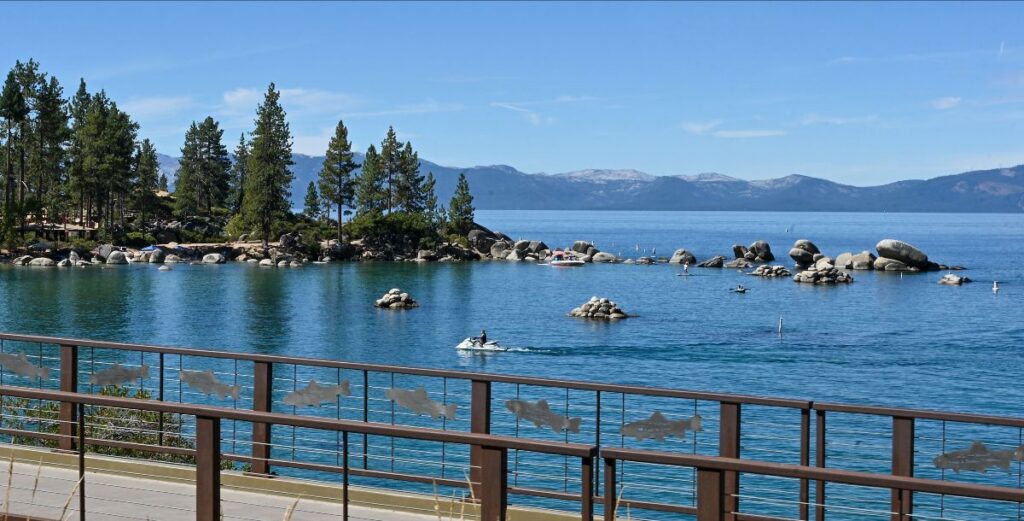
Photos by: TRPA and Brandi Caskey / Indigo Photography
A Safer, More Connected East Shore
The 28-mile Nevada State Route 28 (SR 28) corridor serves more than 1 million recreation visitors and 4 million vehicles each year. It’s a National Scenic Byway and an iconic stretch of Tahoe shoreline, connecting visitors to some of the region’s most popular recreation destinations. But accommodating that demand while protecting this extraordinary landscape is a complex transportation challenge. Limited parking and pedestrian facilities have created significant safety, congestion, and environmental challenges.
In 2013, 13 partner agencies came together to develop a shared vision for the corridor: safer travel, better recreation access, less impact on Lake Tahoe, and more transportation choices. That collaborative vision continues today through a suite of projects being advanced by partners throughout the corridor.
The Tahoe East Shore Trail was the first major milestone, opening its first 3 miles between Incline Village and Sand Harbor State Park in 2019. The trail, combined with managed parking areas at the north end and active parking enforcement outside of the park, effectively eliminated unsafe roadside parking along a key section of SR 28 and helped manage capacity at Sand Harbor State Park.
The trail is now being extended with funding from a federal grant and significant philanthropic support through the Tahoe Fund, creating more opportunities to walk and bike along the shoreline. Work is underway to expand the East Shore Trail from Sand Harbor to Thunderbird Lodge and eventually all the way south to Spooner Summit, where the Nevada Department of Transportation is constructing the Spooner Mobility Hub. This managed parking area will also house a permanent aquatic invasive species watercraft inspection station.
Other pieces of the vision are coming together, too. The U.S. Forest Service and partners recently completed improvements to the Chimney Beach trailhead parking area, providing safer off-highway access to popular recreation areas.
The East Shore Express, operated by the Tahoe Transportation District, offers another way to access the corridor and leave personal vehicles behind. The Express is planned to extend beyond its current route between Tunnel Creek and Sand Harbor State Park, connecting more recreation sites to new and planned parking areas along the corridor.
Together, these projects are transforming SR 28 from a challenging two-lane highway into a safer, more connected, and sustainable gateway to Tahoe’s abundant public lands.
Graphic by: Tahoe Transportation District
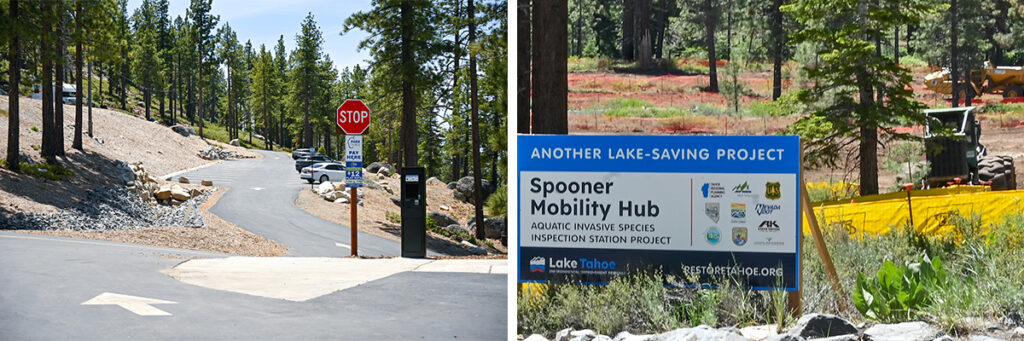
| The improved Chimney Beach parking (left) and the in-progress Spooner Mobility Hub and Aquatic Invasive Species Inspection Station project (right) showcase how EIP investments can improve safety and recreation access while protecting Lake Tahoe’s water quality and supporting more sustainable transportation. Photos by: TRPA |